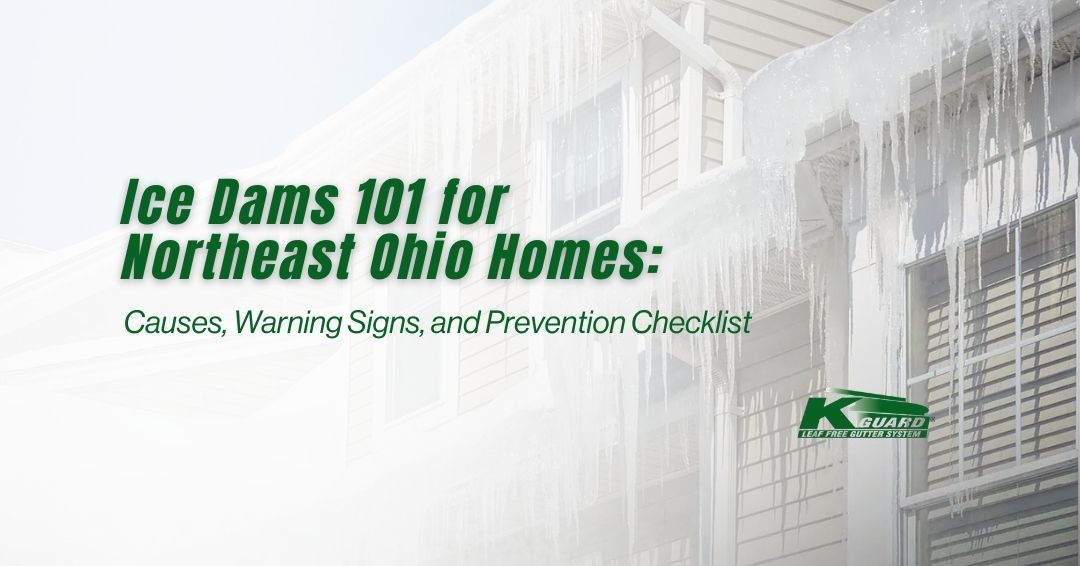
You notice water stains on your ceiling, and icicles hang from your gutters like frozen daggers. Your roof edge looks like it’s wearing a thick ice collar.
These are warning signs of ice dams.
Ice dams cause serious damage to homes in Northeast Ohio every winter. Ice dam removal costs average $1,200, but the real expense comes from the damage they create. Roof repairs can reach $10,000 to $25,000, and water damage typically costs $2,000 to $5,000.
The good news? Ice dams are preventable.
In this guide, you’ll learn exactly how ice dams form, how to spot the warning signs before damage occurs, and most importantly, a practical prevention checklist you can use to protect your Northeast Ohio home this winter.
What Are Ice Dams and How Do They Form?
An ice dam is a ridge of ice that forms at the edge of your roof. It blocks melting snow from properly draining off your roof.
Here’s how ice dams form:
- Heat escapes from your attic. This warms the upper part of your roof above 32°F.
- Snow on the warm part melts. Water runs down toward the colder roof edge.
- Water refreezes at the cold edge. This creates a dam of ice that grows larger over time.
- Melted water backs up behind the dam. It seeps under your shingles and into your home.
Just 6 inches of snow can trigger ice dams under the right conditions. When temperatures fluctuate between freezing and thawing, you create the perfect environment for ice dam formation.
Warning Signs You Have an Ice Dam Problem
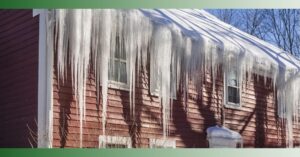
Catch ice dams early to prevent major damage. Watch for these signs:
- Large icicles hanging from your gutters. A few small icicles are normal. Thick, heavy icicles signal water backup.
- Ice buildup at your roof edge. Look for a thick ridge of ice along the eaves.
- Water stains on ceilings or walls. These appear near exterior walls, especially in upper floors.
- Peeling paint or moisture in the attic. Water finds its way through insulation and drywall.
- Sagging gutters. Ice weighs a lot. Just one inch of ice reaches the weight limit of most gutter systems.
Many homeowners don’t notice problems until water stains appear indoors. By then, damage has already started.
Why Ice Dams Are Expensive
Ice dams create a chain reaction of damage:
- Roof damage. Water seeps under shingles and damages the roof deck. Replacement costs $10,000 to $25,000.
- Interior water damage. Ceilings, walls, and insulation get soaked. Repairs typically run $2,000 to $5,000.
- Mold growth. Water damage creates perfect conditions for mold. Removal costs $20 to $25 per square foot.
- Gutter damage. Heavy ice pulls gutters away from your house or causes them to collapse.
Water damage and freezing account for 27.6% of property insurance claims. Ice dams represent one of the most common winter insurance claims in the Northeast.
Your Ice Dam Prevention Checklist
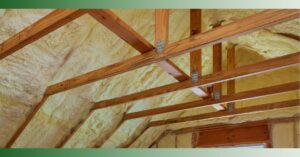
Prevention works better than emergency removal. Here’s what you need to do:
1. Check Your Attic Insulation
Proper insulation stops heat from escaping through your roof.
Northeast Ohio homes (Climate Zone 5) need attic insulation rated R-49 to R-60. This means 16 to 20 inches of fiberglass batts or 13 to 17 inches of blown cellulose.
Look in your attic. If you can see the floor joists, you need more insulation.
2. Seal Air Leaks
Air leaking into your attic causes ice dams. Even small gaps let warm air escape.
Check around:
- Recessed lights
- Plumbing vents
- Attic hatches
- Chimney penetrations
- Electrical wires
Seal these gaps before adding insulation.
3. Improve Attic Ventilation
Good ventilation keeps your attic cold in winter. This prevents snow from melting on your roof.
Your attic needs both intake vents (at the soffits) and exhaust vents (at the ridge or gables).
4. Keep Gutters Clear
Clogged gutters trap water and ice. This makes ice dams worse.
Traditional gutters need to be cleaned twice a year. But climbing ladders in winter is dangerous, so make sure they are cleaned before winter weather arrives.
5. Consider Heated Gutter Protection
This is where K-Guard with HotWire makes a difference.
K-Guard’s heated gutter system prevents ice dams at the source. The HotWire heating element melts snow and ice before they can form dams. Water drains properly even in freezing temperatures.
The system works automatically; you don’t climb ladders, and you don’t worry about ice buildup.
K-Guard also eliminates gutter cleaning forever. The large hood design keeps debris out while handling high water volume. The system installs in just a couple of days.
What NOT to Do About Ice Dams
Some common “solutions” cause more problems:
- Don’t chip away ice with tools. You’ll damage your shingles and gutters.
- Don’t use salt or chemicals. These corrode your roof and harm plants below.
- Don’t ignore the problem. Ice dams grow larger until the weather warms up consistently.
Emergency ice dam removal typically costs $700 to $900 per hour. Prevention costs less and protects your home all winter.
Take Action Before the Next Storm

Northeast Ohio is experiencing severe winter conditions right now. Fluctuating temperatures and heavy snowfall create ideal conditions for ice dam formation.
You can prevent ice dams with the right approach:
- Improve your attic insulation and ventilation
- Seal air leaks that let heat escape
- Install a heated gutter system that works automatically
K-Guard with HotWire gives you year-round protection. That means no more ice dams, gutter cleaning, or winter damage.
Ready to protect your home? Contact K-Guard today for a free consultation. Our team will assess your home and recommend the best solution for your situation.
Don’t wait for water stains to appear. Prevent ice dams before they damage your home.
Frequently Asked Questions
How much snow does it take to form an ice dam?
Ice dams can form with as little as 6 inches of snow when temperatures fluctuate between freezing and thawing. The key factor is the temperature difference between your roof and the outside air.
Can I remove ice dams myself?
DIY ice dam removal is risky. You can damage your roof, gutters, or hurt yourself. Professional removal costs $700 to $900 per hour. Prevention through proper insulation and heated gutters works better.
Will better insulation alone prevent ice dams?
Proper insulation helps significantly, but you also need good ventilation and sealed air leaks. The combination keeps your attic cold and prevents snow from melting on your roof.
How does K-Guard’s HotWire system work?
The HotWire heating element runs along your roof edge and through the K-Guard gutter system. It melts snow and ice automatically, allowing water to drain properly even in freezing temperatures. The system prevents ice dams from forming in the first place.
Are heated gutters expensive to run?
Modern heated gutter systems, such as K-Guard’s HotWire, use self-regulating technology. The system adjusts heat output based on temperature, making it energy efficient. The cost to run is minimal compared to ice dam damage repairs.